IPTV (Internet Protocol Television) is a technology, not a content source. It delivers television content over the internet instead of through traditional cable, satellite, or terrestrial signals. The technology itself is legal in every country — the same way the internet is legal, but what you do on it determines whether you are breaking the law.
This guide explains the difference between legal and illegal IPTV, how to tell them apart, and what you need to know to use IPTV legally.
The Core Principle: Technology vs Content
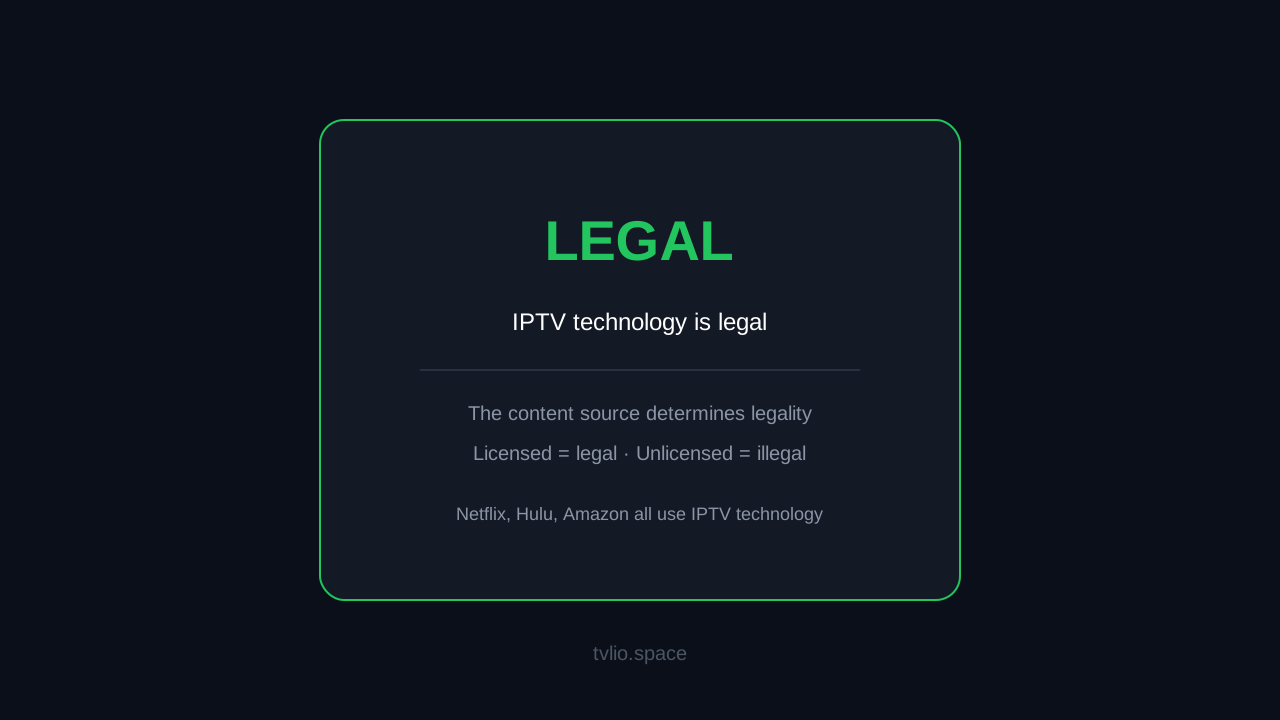
IPTV is a delivery method. Netflix uses IPTV. Hulu uses IPTV. Amazon Prime Video uses IPTV. Disney+ uses IPTV. Every major streaming service delivers content over the internet — that is IPTV.
- The technology is legal — streaming video over IP is a fundamental internet protocol. No law prohibits IPTV as a technology.
- The content determines legality — a legal IPTV service streams content that the provider has the right to distribute. An illegal IPTV service streams content without proper licensing.
What Makes an IPTV Service Legal
A legitimate IPTV service operates like any other media company:
- Licensed content — the provider has agreements with content owners (channels, studios, networks) to distribute their content.
- Transparent business — registered company, clear pricing, public-facing support, terms of service, refund policy.
- Payment processing — accepts credit cards, PayPal, or other traceable payment methods. Card processors require compliance with content licensing laws.
- No stolen credentials — each subscription is a unique, individually provisioned account — not shared or resold line access.
What Makes an IPTV Service Illegal
An illegal IPTV service redistributes content without the rights to do so:
- Unlicensed content — streams TV channels, movies, or sports events without agreements from the content owners.
- Stolen or shared credentials — sells access to stolen line credentials or shares one subscription across thousands of users.
- Anonymous operation — no company registration, no public support, cryptocurrency-only payments, no terms of service.
- Suspiciously low pricing — "lifetime" access for $5-10 is not sustainable with licensed content. The content is either pirated or the operation is a scam.
IPTV Legality by Country
IPTV legality varies by jurisdiction. Here is a summary of the major markets:
United States
IPTV technology is legal. The US has strict copyright enforcement (DMCA), and distributing unlicensed content is illegal. However, using an IPTV service (as a viewer) is generally not prosecuted — enforcement targets providers, not consumers. That said, accessing pirated content is technically a copyright violation regardless of whether you are the viewer or the distributor.
United Kingdom
IPTV technology is legal. The UK has a specific law against "dishonestly receiving" TV signals (Fraud Act 2006), which has been applied to users of illegal IPTV services. In 2023, the UK Intellectual Property Office clarified that watching illegal IPTV streams could constitute fraud. The UK is one of the few countries where viewers (not just providers) can face legal consequences.
European Union
IPTV technology is legal across EU member states. Each country has its own copyright enforcement approach, but the EU Copyright Directive (2019) provides a framework for holding both providers and platforms accountable. Viewer prosecution is rare but possible in some jurisdictions.
Canada
IPTV technology is legal. Canada has copyright laws that prohibit unauthorized distribution, but viewer enforcement is minimal. The Canadian Radio-television and Telecommunications Commission (CRTC) regulates broadcasting but does not prohibit IPTV technology.
Australia
IPTV technology is legal. Australia has strong copyright laws and has blocked access to some illegal streaming sites. Using a legal IPTV service is fine; accessing pirated content is a copyright violation.
How to Tell if an IPTV Provider Is Legal
Run through this checklist before signing up:
- Is there a real company behind it? — registered business name, physical address (even if just a registered agent), clear ownership. Anonymous providers are a red flag.
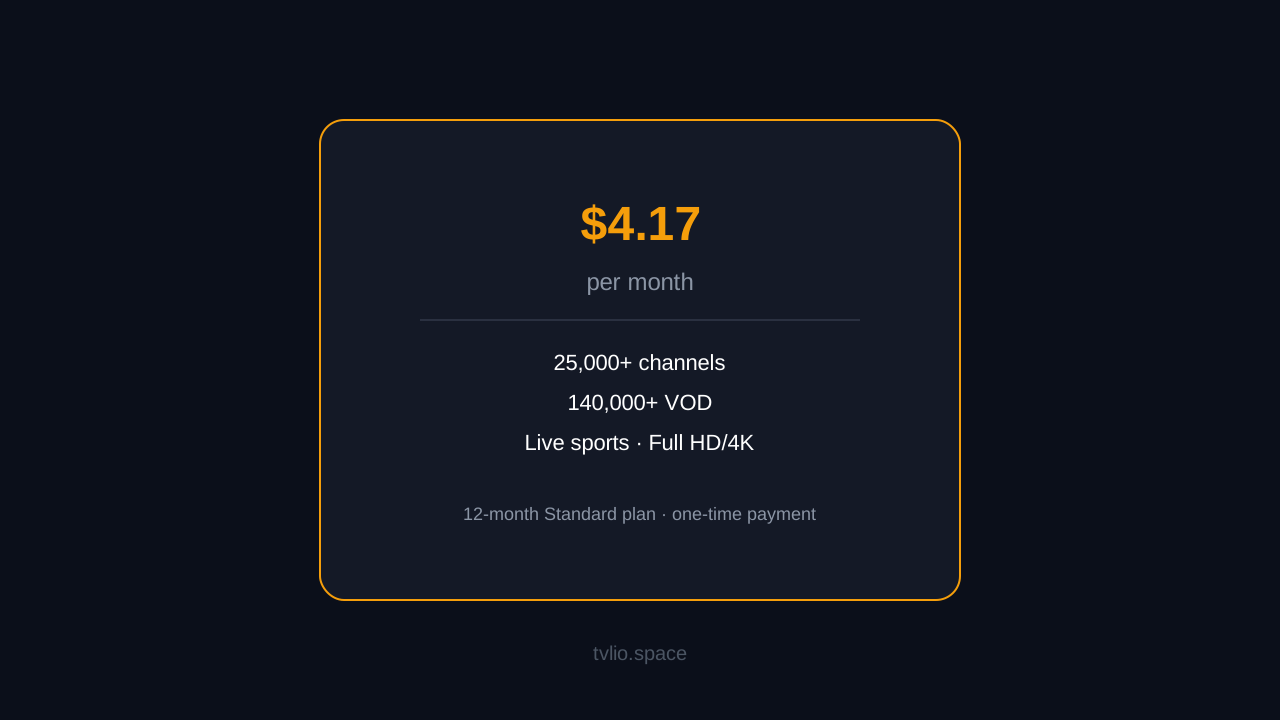
- Is the pricing sustainable? — $3-15/month is reasonable for a licensed service. $2-5 "lifetime" deals are not sustainable with legitimate content.
- Do they accept card payments? — credit card processors require compliance with content laws. Cryptocurrency-only providers are harder to trace and hold accountable.
- Is there a free trial? — legitimate providers offer genuine trials because they believe in their service. Providers that require payment details upfront are likely running a subscription trap.
- Do they have responsive support? — legitimate operations invest in customer support. Anonymous or unresponsive support is a warning sign.
- Are there terms of service? — legal providers publish clear terms, privacy policies, and refund policies. Providers without these documents are operating informally.
The Gray Area
Some IPTV services operate in a gray area:
- Restreaming — some providers take legally broadcast content and restream it without permission from the broadcaster. This is technically illegal even though the original content was broadcast freely.
- VPN access — some users access IPTV services that are only licensed in certain countries by using a VPN. This may violate the provider's terms of service and potentially copyright law.
- Free trials of illegal services — a free trial from an illegal provider is still illegal. The legality of the content does not change based on whether you are paying for it.
What About the Viewer?
The legal risk to viewers varies by country:
- UK — the highest viewer risk. The Fraud Act has been applied to illegal IPTV users. Fines and even prosecution are possible.
- US — theoretical risk under DMCA, but viewer prosecution is extremely rare. Enforcement targets providers and distributors.
- EU/Canada/Australia — minimal viewer risk. Copyright holders typically target providers, not consumers.
The safest approach is to use a legitimate, licensed IPTV provider. The risk is low for viewers in most countries, but using a legal service eliminates the risk entirely.
How Tvlio Operates
Tvlio operates as a licensed IPTV subscription service:
- Registered business — we operate under clear business terms with transparent ownership.
- Card payments accepted — we accept major payment methods, which require compliance with content regulations.
- Transparent pricing — all prices are published on our website with no hidden fees.
- 7-day money-back guarantee — if you are not satisfied, you get your money back. This is only possible with a legitimate operation.
- 24/7 WhatsApp support — real humans, real support, real accountability.
Frequently Asked Questions
Is IPTV legal?
IPTV technology is completely legal. The legality depends on the content source — a licensed IPTV service is legal; an unlicensed one is not. Netflix, Hulu, and Amazon Prime Video all use IPTV technology.
Can I get in trouble for using IPTV?
It depends on the provider and your country. Using a licensed, legitimate IPTV service carries no legal risk. Using an unlicensed service technically violates copyright law, but enforcement against viewers is rare in most countries (the UK is the main exception).
How do I know if my IPTV provider is legal?
Check for: a registered company, sustainable pricing ($3-15/month), credit card payment options, responsive support, clear terms of service, and a free trial. Illegal providers are typically anonymous, accept only cryptocurrency, and offer suspiciously low prices.
Is it legal to use a VPN with IPTV?
Using a VPN is legal in most countries. However, using a VPN to access an IPTV service that is only licensed in certain regions may violate the provider's terms of service and potentially copyright law. Using a VPN with a licensed service in your own country is generally fine.